The Canal as Designed Landscape
Pierre-Paul Riquet completed what he had begun in 1667: a navigable waterway linking the Atlantic to the Mediterranean, 240 kilometres of canal running from Toulouse to the Étang de Thau near Sète. Construction ended in 1681, the year after his death in 1680. The canal was designated a UNESCO World Heritage Site in 1996, recognised not only as an engineering achievement but as a composed landscape — locks, aqueducts, basins and the continuous planted avenue that lines its towpaths.
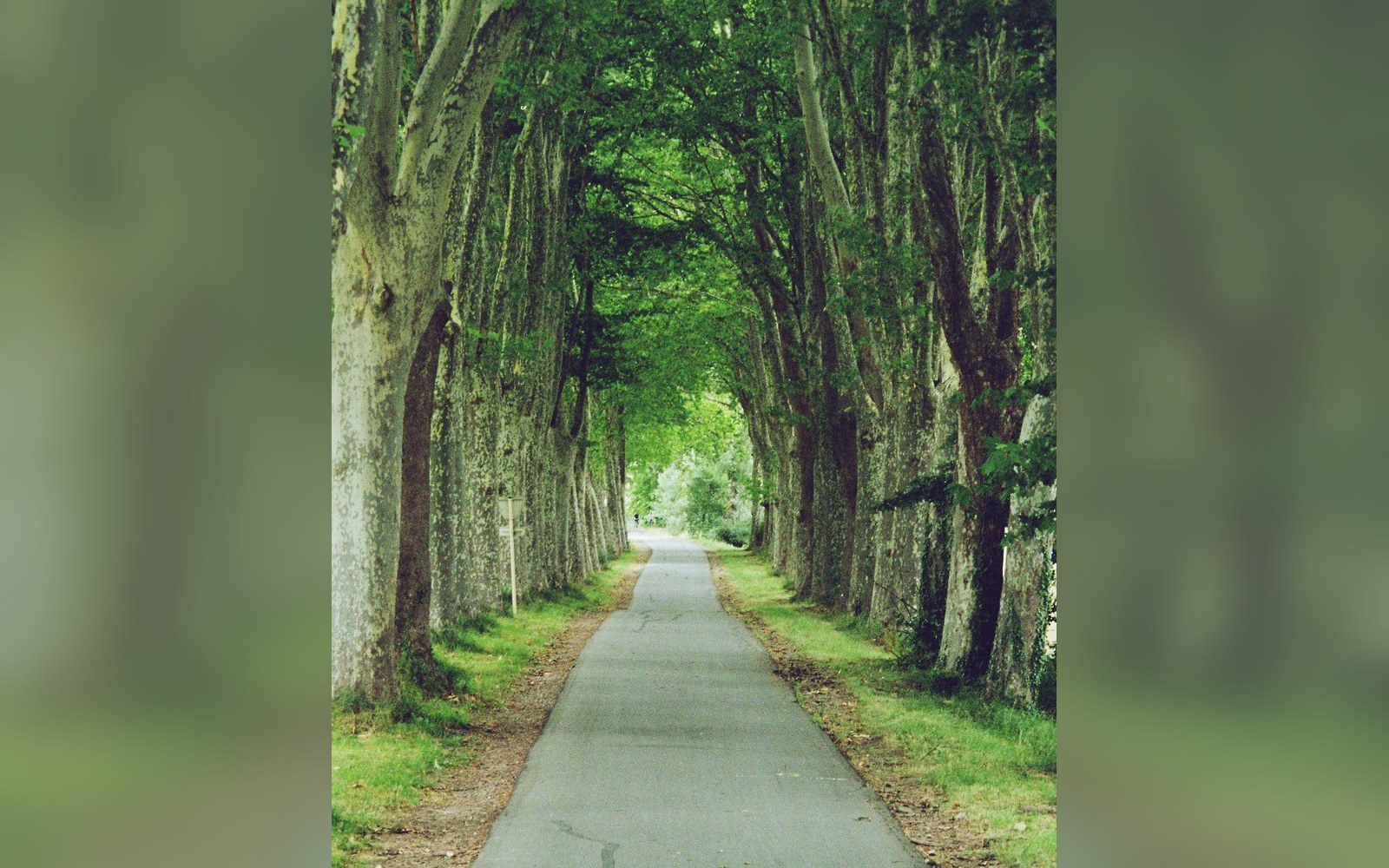
The plane trees, platanes in French, were not part of Riquet's original scheme. They arrived in successive waves from the eighteenth century onward, planted systematically to serve two practical purposes: their roots stabilise the embankment, and their canopy shades the water, slowing evaporation in the fierce summer heat of the Languedoc. By the twentieth century approximately 42,000 trees lined the canal. Measured from bank to bank, the platane canopy formed an almost unbroken vault for much of the route, and was itself cited in the UNESCO dossier as integral to the site's outstanding universal value.
The letter decides.
Photo: The Daphne Lens / Pexels
The Pathogen and Its Spread
Canker stain (chancre coloré) is a disease caused by the fungus Ceratocystis platani, which spreads mainly through wounds in the bark. Once inside a host plant, it colonises the xylem vessels — the water-conducting tissue — and progressively blocks them, causing the shoots to scorch and die back from the tips. In plane trees this appears as a rapid dieback, the crown losing branches over successive seasons before the tree dies. There is no cure.
The fungus was identified on the Canal du Midi in 2006. It is not native to France and was introduced through human activity rather than spreading naturally across the landscape. Voies Navigables de France (VNF), the public body responsible for managing France's navigable waterways, began emergency felling almost immediately — diseased trees cannot be treated and must be removed to limit the spread of the fungus to neighbouring trees. By the early 2020s tens of thousands of trees had been felled or marked for removal along the canal corridor, a large share of the original planting.
Grazing, not wilderness, is the listed thing.
Photo: André Cogez / Pexels
The effect on the canal as a UNESCO landscape is severe. In sections where felling has been dense — particularly around Capestang and Béziers — the towpath now runs open to the sky for long stretches. The light conditions, the microclimate, the experience of the canal and the ecological coherence of the corridor are all materially altered.
What Replanting Proposes
VNF's replanting programme, developed in consultation with plant pathologists, phytosanitary authorities and landscape specialists, does not attempt to replant the susceptible common plane. The fungus persists in the soil and water of the corridor, passing from tree to tree through root contact and along the canal itself, and a new ordinary platane would be reinfected within years. The proposed species palette draws instead on native and naturalised trees suited to the Languedoc climate and not hosts of Ceratocystis platani: stone pines, holm oaks, hackberries, aleppo pines and a selection of drought-tolerant shrubs.
The visual and functional outcome will differ from what the canal looked like at any point in its history. Stone pines and holm oaks grow more slowly and form a different canopy profile from the broad-vaulted plane. The embankment-stabilising role of the root system must be replicated species by species, with geotechnical assessment at each planting location. The programme is phased over several decades; full canopy recovery, even with resistant species, is a generational project.
Riquet's waterway has outlasted its builder by more than three centuries. What it will not recover is the specific landscape the platane created — an accidental monument in its own right, and now a casualty of an introduced pathogen.