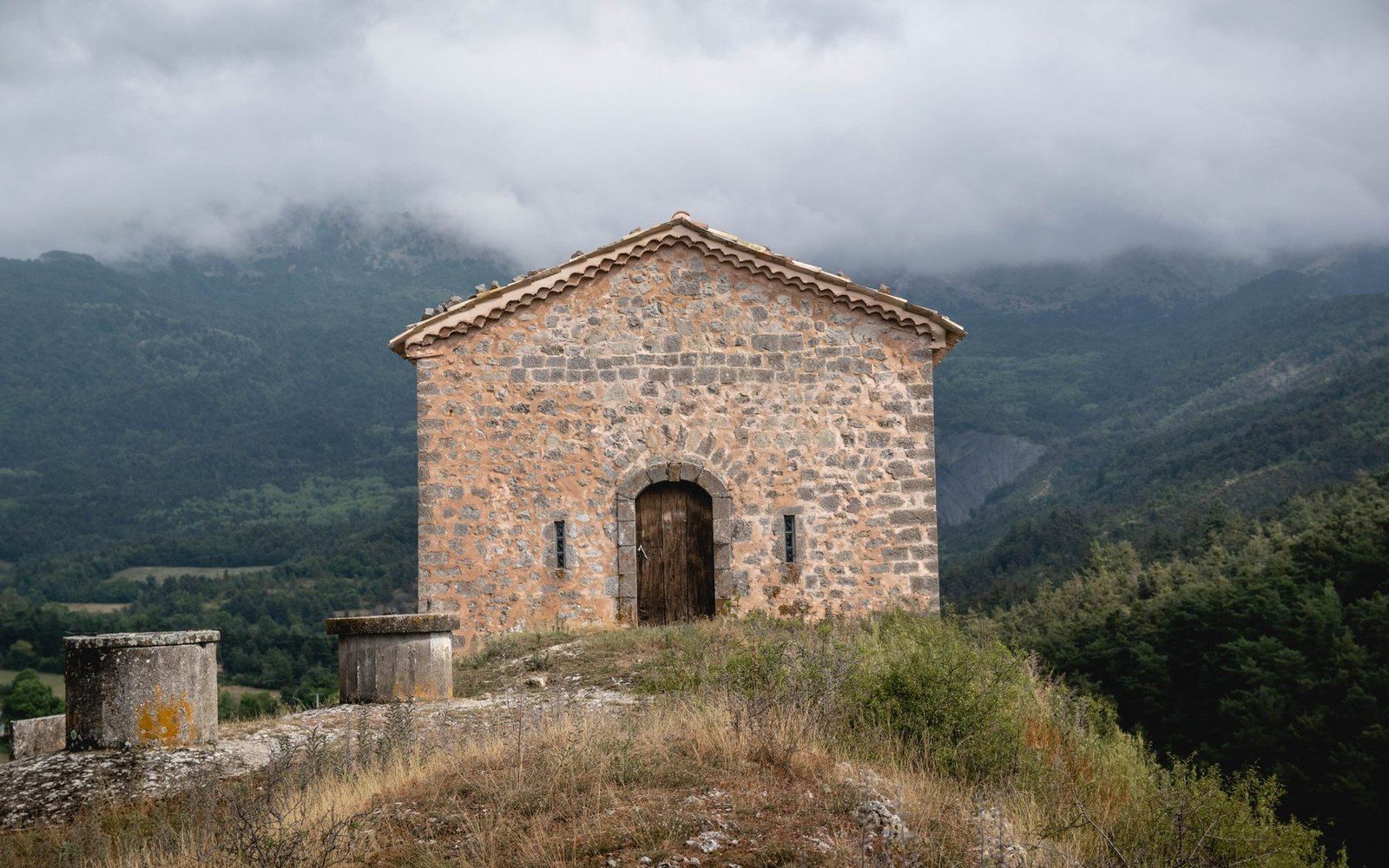
A Farmer's Problem, Not a Traveller's
In 1955, Émile Aubert, a civil servant working in the Alpes-de-Haute-Provence, identified a problem that had nothing to do with holidays. Rural France was emptying. The postwar economic boom was pulling agricultural workers toward the cities, and the upland departments — the Alpes-de-Haute-Provence among the most exposed — were losing farms to abandonment faster than any policy had managed to slow. Aubert's response was practical: if a farmer could generate supplementary income from a spare outbuilding, he might stay put.
The mechanism Aubert devised was a small state subsidy tied to basic renovation. A farmer who brought a disused barn, a stone storeroom or a secondary wing of the farmhouse up to a defined habitable standard would receive a grant toward the cost. In return, the property would be made available to visiting families for short stays at a fixed price. The visitors were not the point. The fixed income, predictable and season-linked, was the instrument by which the farmer was expected to remain solvent on marginal land.
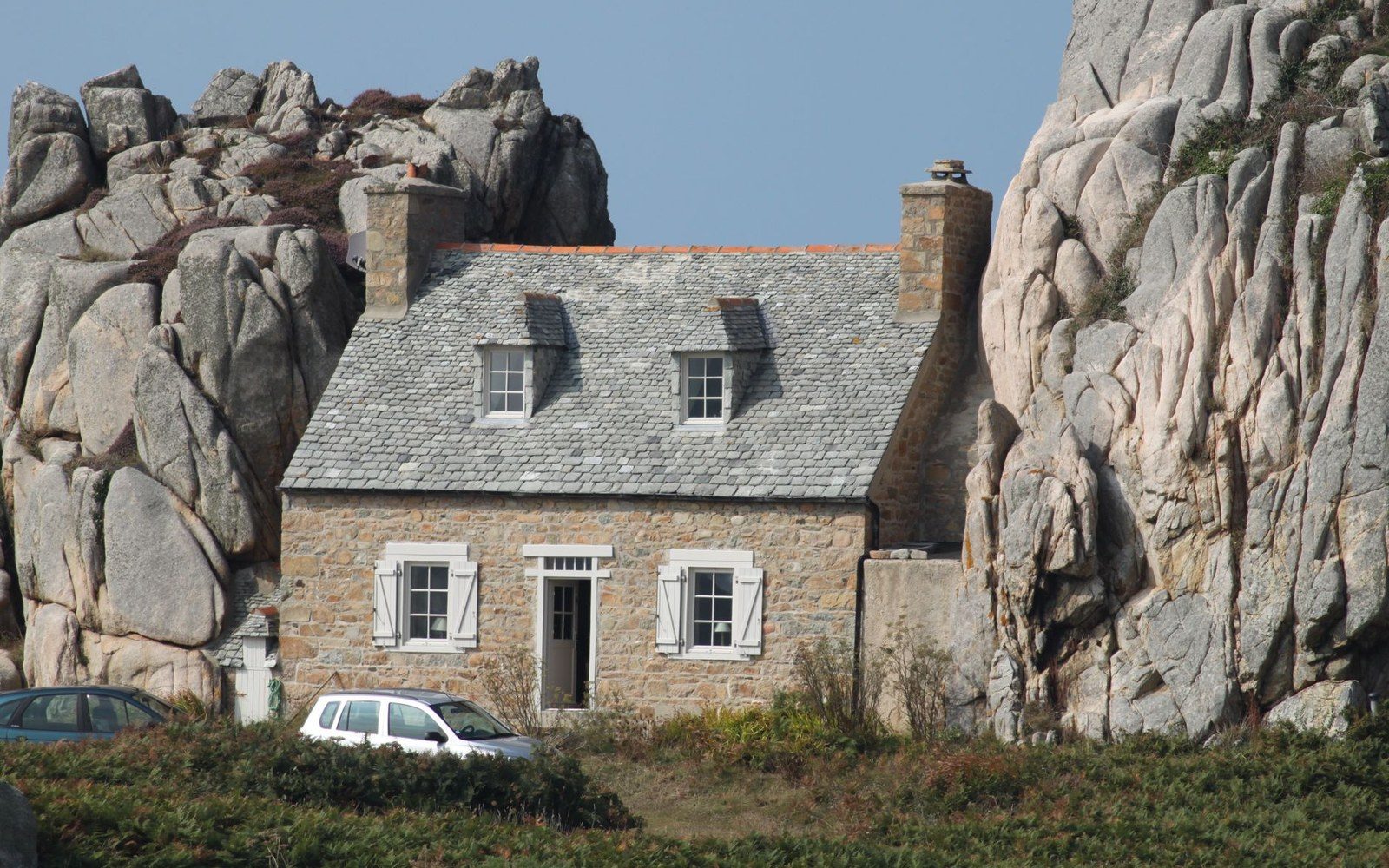
The blind north gable: a longère was lengthened along its ridge, never outward.
Photo: lemapuche breton / Pexels
The first properties to carry what became the gîte rural label — gîte meaning simply a lodging or a refuge — were concentrated in the upland communes of Provence and the southern Alps, the landscapes that the Causses and Cévennes would later represent in UNESCO's category of agropastoral cultural terrain. They were working farms first and visitor properties incidentally. The renovation standard was minimal by any later measure: running water, a functional hearth or stove, a sleeping area separated from the main farm activity.
From Departmental Scheme to National Federation
What Aubert had begun as a local administrative instrument was formalised nationally within a decade. The Fédération Nationale des Gîtes de France was established to coordinate the scheme across departments, standardise the renovation criteria and provide a common identity that visiting families could recognise. By the early 1960s the label had spread well beyond Provence into Brittany, the Auvergne, Normandy and the southwest, each region adapting the basic model to its own building stock — the granite longères of Brittany, the basalt farm buildings of the Cantal, the sandstone bastides of the Périgord.

A wheat sheaf instead of a star.
Photo: Tymur Khakimov / Pexels
The federation introduced grading, eventually formalised as the épi system — the wheat-sheaf symbol, one to five, that replaced the hotel-star vocabulary with something rooted in agricultural imagery. The choice of the wheat sheaf was not decorative. It kept the scheme's founding rationale visible: this was about farming land and the families working it, not about the hospitality trade.
Affiliation to Gîtes de France brought inspection, a national listing and, in time, insurance arrangements and marketing support. It also brought obligations: owners could not simply take the renovation grant and withdraw from the scheme. Properties had to remain available for letting for a minimum period each year, priced within the bands the federation set. The subsidy logic required the supply to be real.
What the Founding Moment Still Explains
The original subsidy orientation explains several features of the gîte that persist today and sometimes puzzle buyers arriving from outside France. A gîte is typically let by the week, not the night — because the early scheme was designed around family holidays that would deliver a single meaningful payment, not a hotel-style flow of revenue. It is typically a self-contained property rather than a room in the owner's house, because the renovation grants funded discrete outbuildings. And it sits on working or formerly working agricultural land, because that was the population the scheme existed to retain.
The post-COVID internal migration that pushed buyers toward the Creuse and the Dordogne, and the market pressure that eventually produced the loi Le Meur, both arrived into a sector whose architecture — legal, physical and commercial — was shaped in the Alpes-de-Haute-Provence in 1955 by a civil servant trying to stop a hillside emptying.