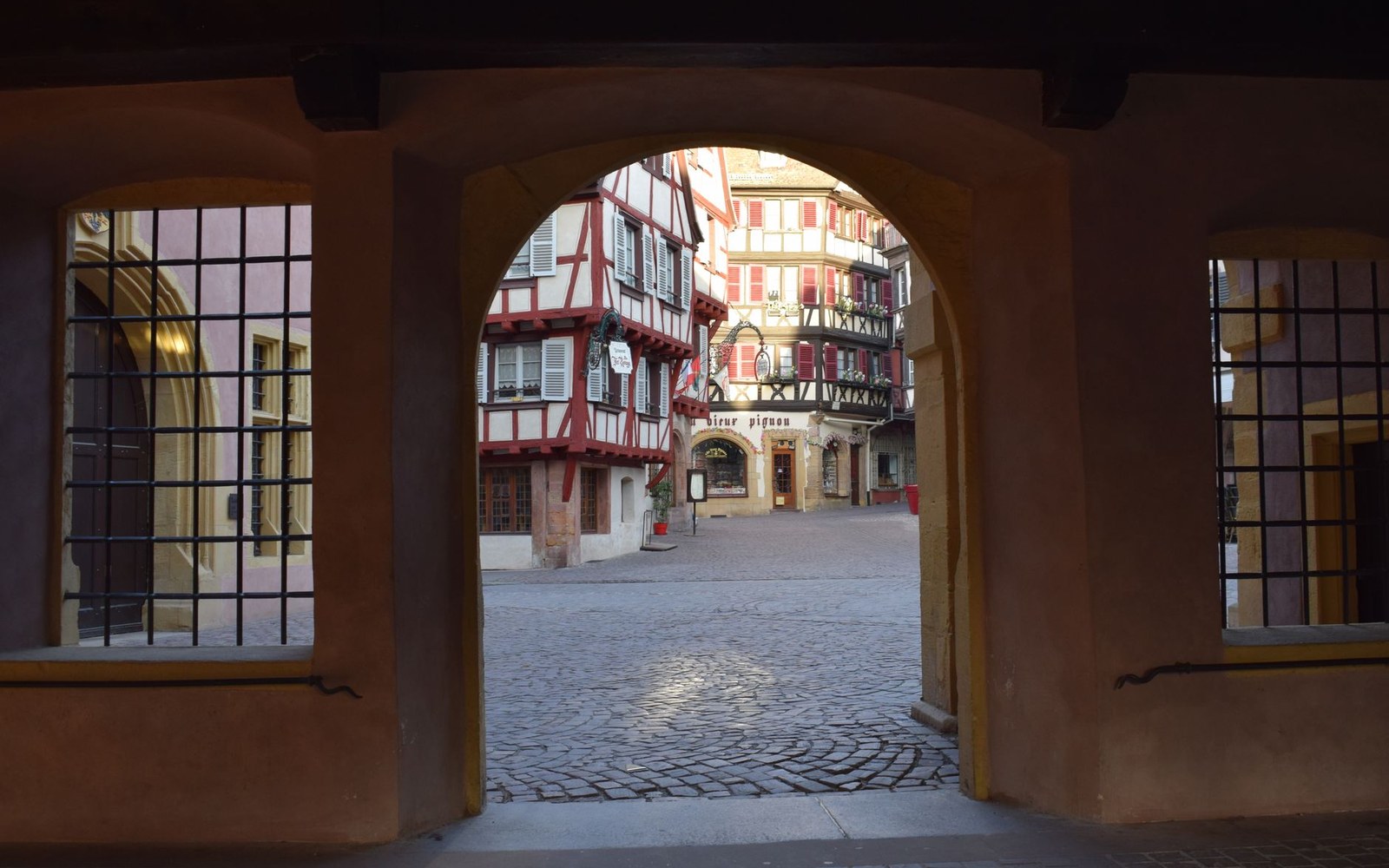
What Colombage Actually Is
Colombage is the structural language of Alsatian vernacular building: a skeleton of oak or fir posts, braces and rails, with the spaces between — the bays — filled with wattle and daub, brick or local sandstone rubble, according to what the immediate valley offered. The frame carries the load; the infill keeps out the weather. That distinction matters for anyone who owns one, because the two components age differently, fail differently and are treated differently under French conservation rules.
The Alsatian version of colombage is distinctive for its density. Bays are narrow, braces multiply across the frame and in the upper storeys of wine-town houses the diagonals fan out into decorative crossed patterns that read, in raking morning light, as shadows on shadows. Colmar's old quarter and the older streets of Strasbourg's Grande Île hold some of the finest surviving concentrations. Strasbourg's Grande Île was inscribed as a UNESCO World Heritage Site in 1988, partly on the evidence of exactly this building fabric.
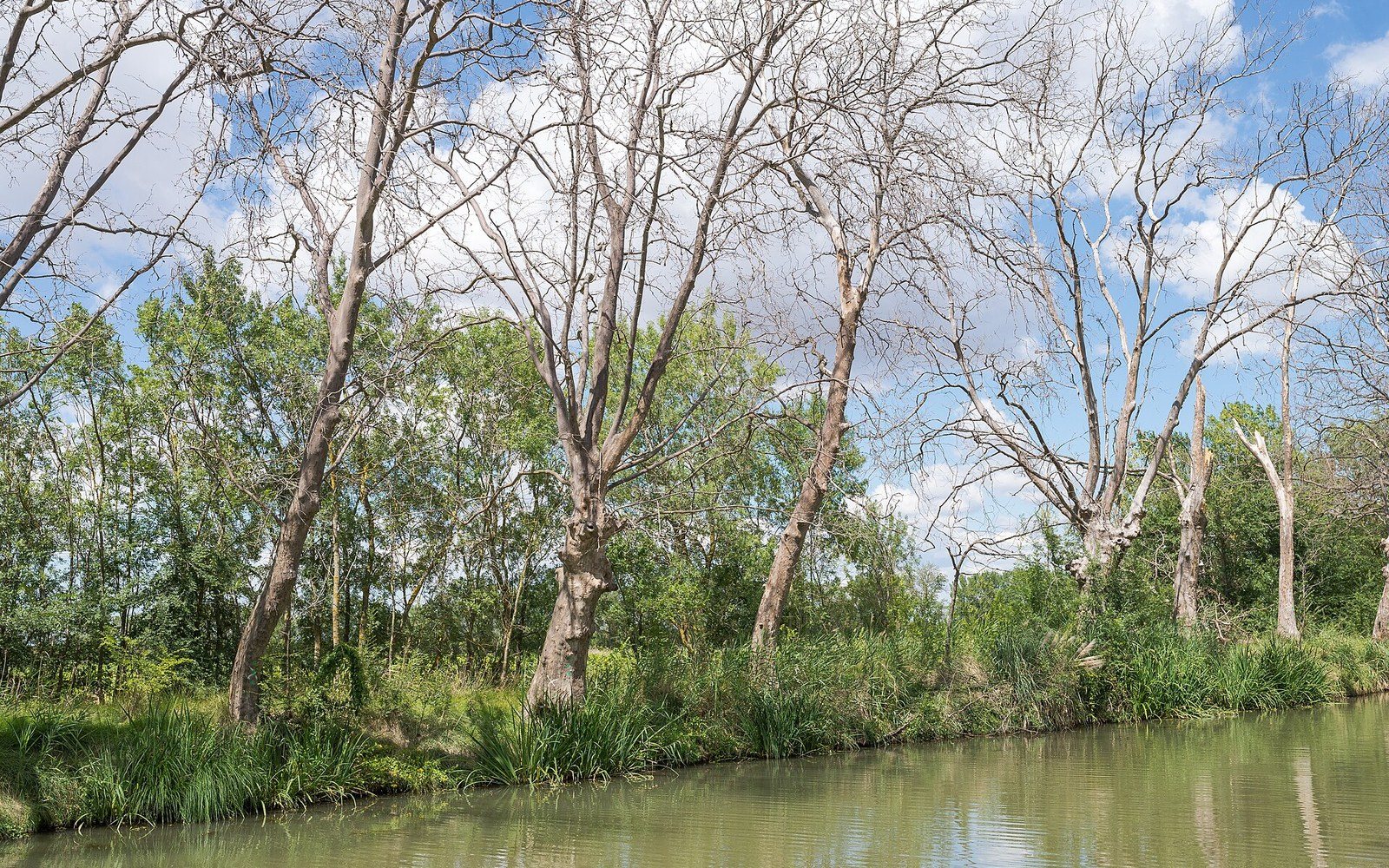
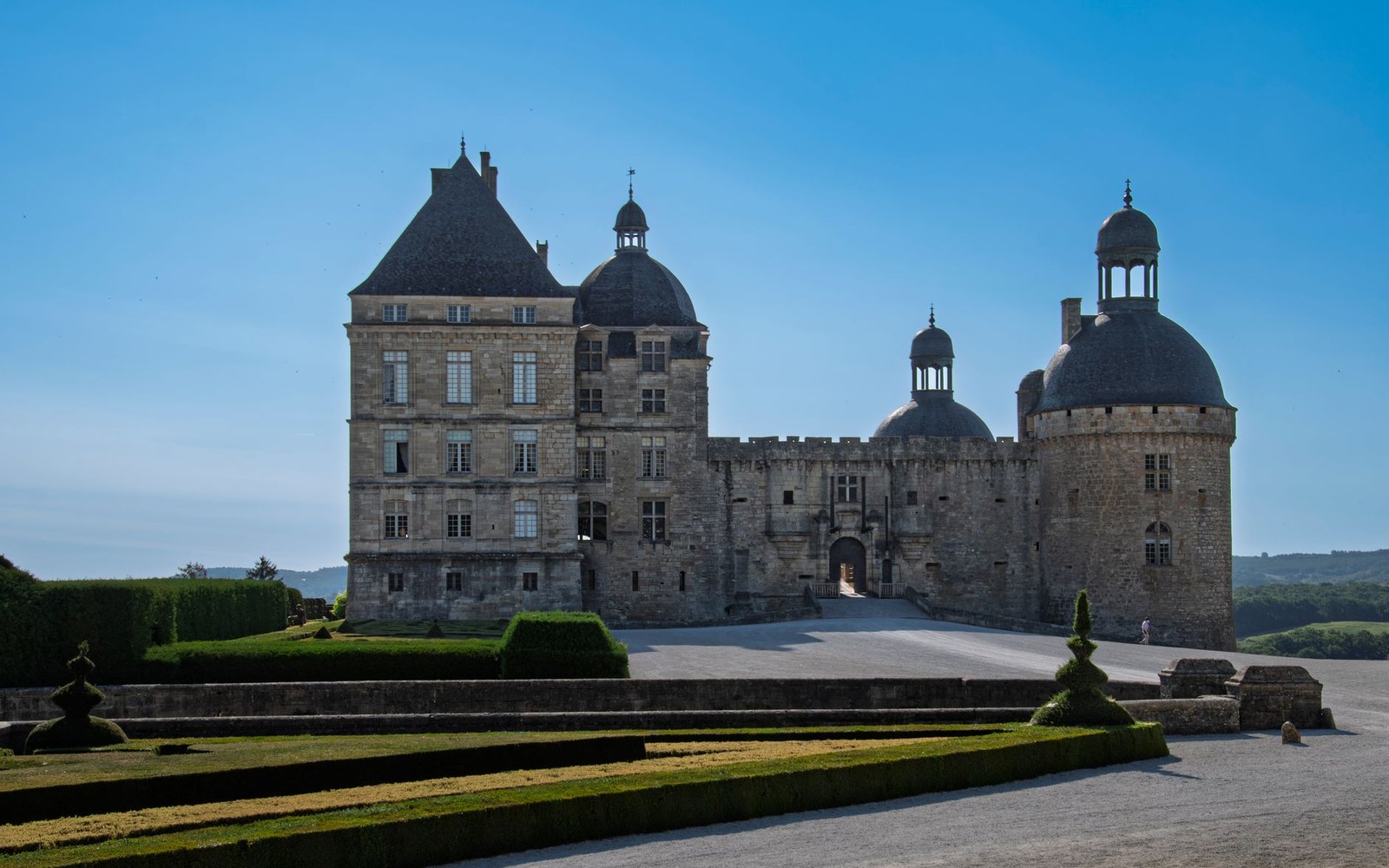
The planes were planted to shade the water and hold the banks together. Symmetry was the point, and the tower beside it was the claim.
Photo: Sick Platanus ×hispanica trees, Canal du Midi, Agde · Wikimedia Commons · Photo: Le sixième rêve / Pexels
The infill between the timbers is frequently colour-washed — deep red ochre, yellow, pale green — and in many houses this colour is original to the region's tradition of limewash mixed with local mineral pigments, rather than a later confection for tourists. The timber itself was historically left to weather or treated with oil; the black paint familiar from Alsatian postcards is, in many cases, a nineteenth-century application.
What the ABF Governs
Both Colmar and Strasbourg sit within protected zones where the Architectes des Bâtiments de France hold statutory authority over any external alteration visible from a public space. Within these zones — drawn around listed monuments and across the historic core under the ZPPAUP and later AVAP designations, now consolidated into Sites Patrimoniaux Remarquables — an owner wishing to repoint the infill, repaint the bays or replace a window must obtain the ABF's prior approval. The ABF can require lime mortar rather than cement, specify colour from a palette matched to the building's documented history, and refuse any substitution of the structural timber with modern materials.
For a meublé de tourisme — a furnished property let for short stays — inside such a zone, every improvement cycle likely triggers ABF review. Cavity insulation into the infill bays is typically refused; internal wall insulation is permissible but changes the room's thermal mass and its proportions. The energy performance consequences of that constraint are considerable, a pressure felt across stone and timber buildings throughout rural France.