The mechanism
Traditional stone walls in the Auvergne, the Périgord and across the limestone plateaux of the Causses were built with lime mortar: a mixture of slaked lime, sand and water that sets slowly, remains slightly porous, and allows the wall to breathe. Moisture that enters through the stone face — from driving rain, from rising damp, from condensation within the wall mass — moves through the mortar joints and evaporates at the surface. The system works because every component is roughly as permeable as every other. The joints are deliberately the weakest element, designed to crumble before the stone does, and can be raked out and repointed without disturbing the masonry.
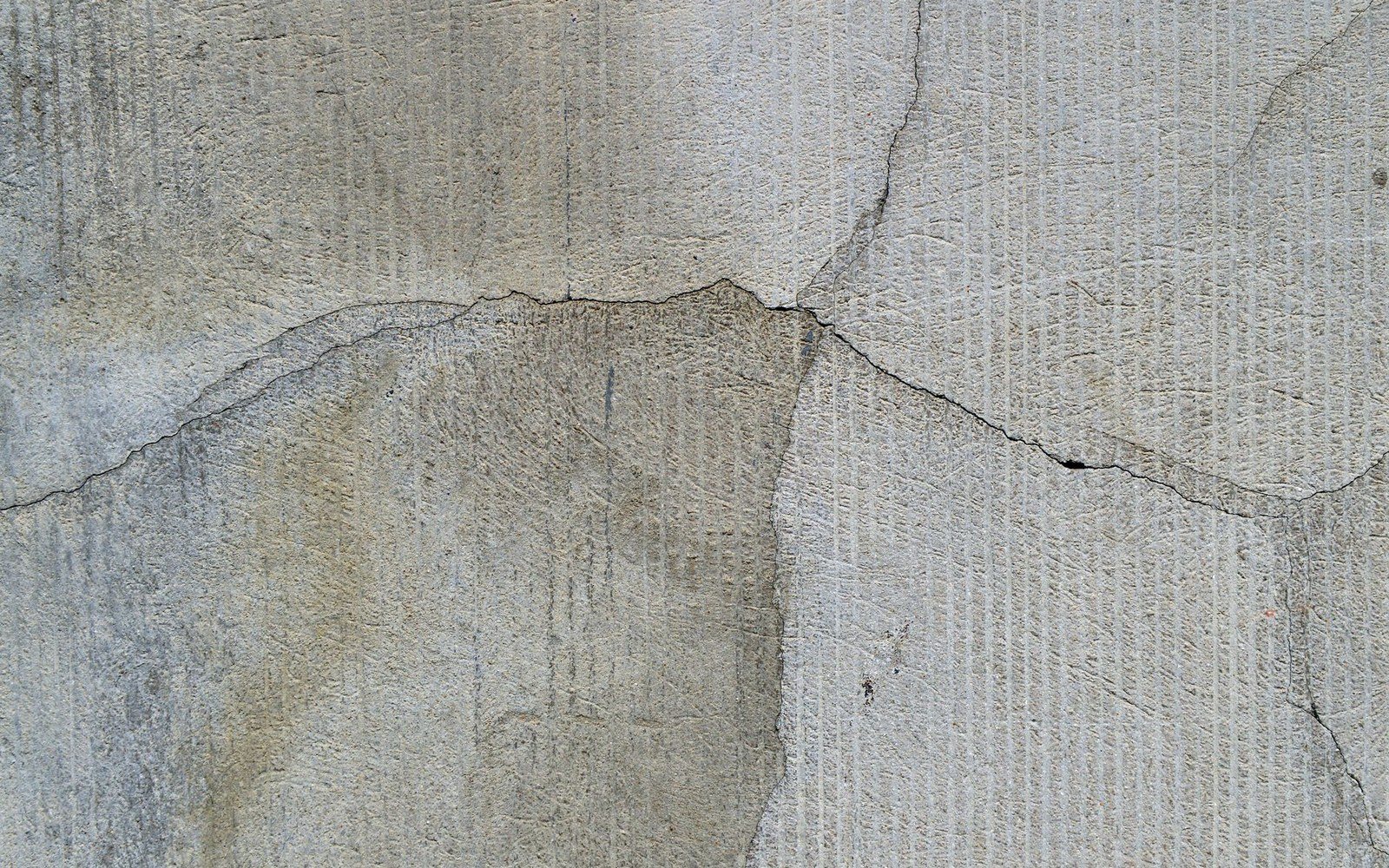
Cement render — ordinary Portland cement mixed with sand — behaves differently. It is dense, hard and largely impermeable once cured. Applied over a lime-mortar wall, it acts as a skin that water can penetrate but cannot easily leave. Rain finds the hairline cracks that develop as the render expands and contracts with temperature, enters the wall, and is then held there because the evaporative pathway is blocked. The wall does not dry out between rain events. It saturates.
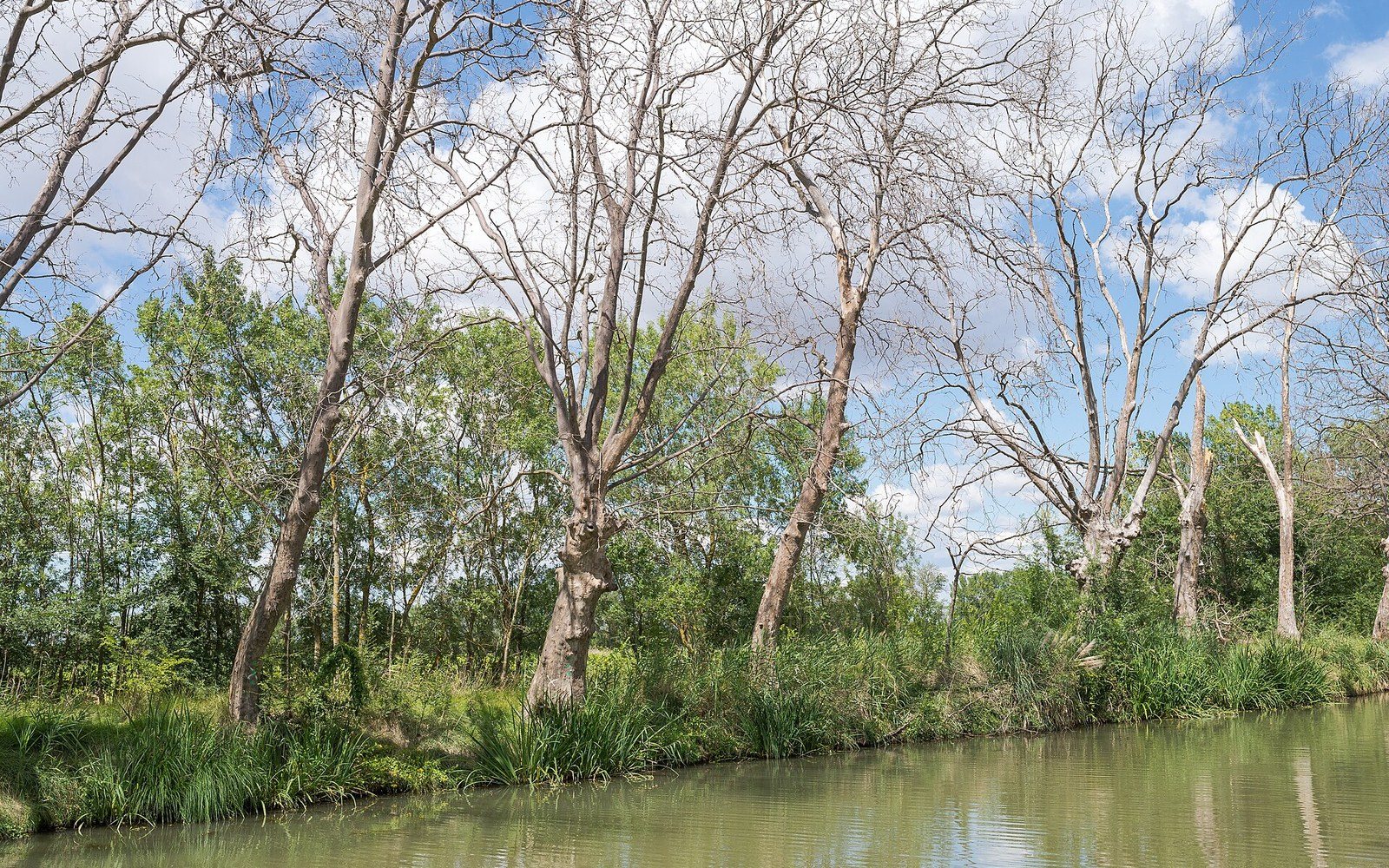
The planes were planted to shade the water and hold the banks together. A monocultural strip 170 kilometres long, held in place by a designation.
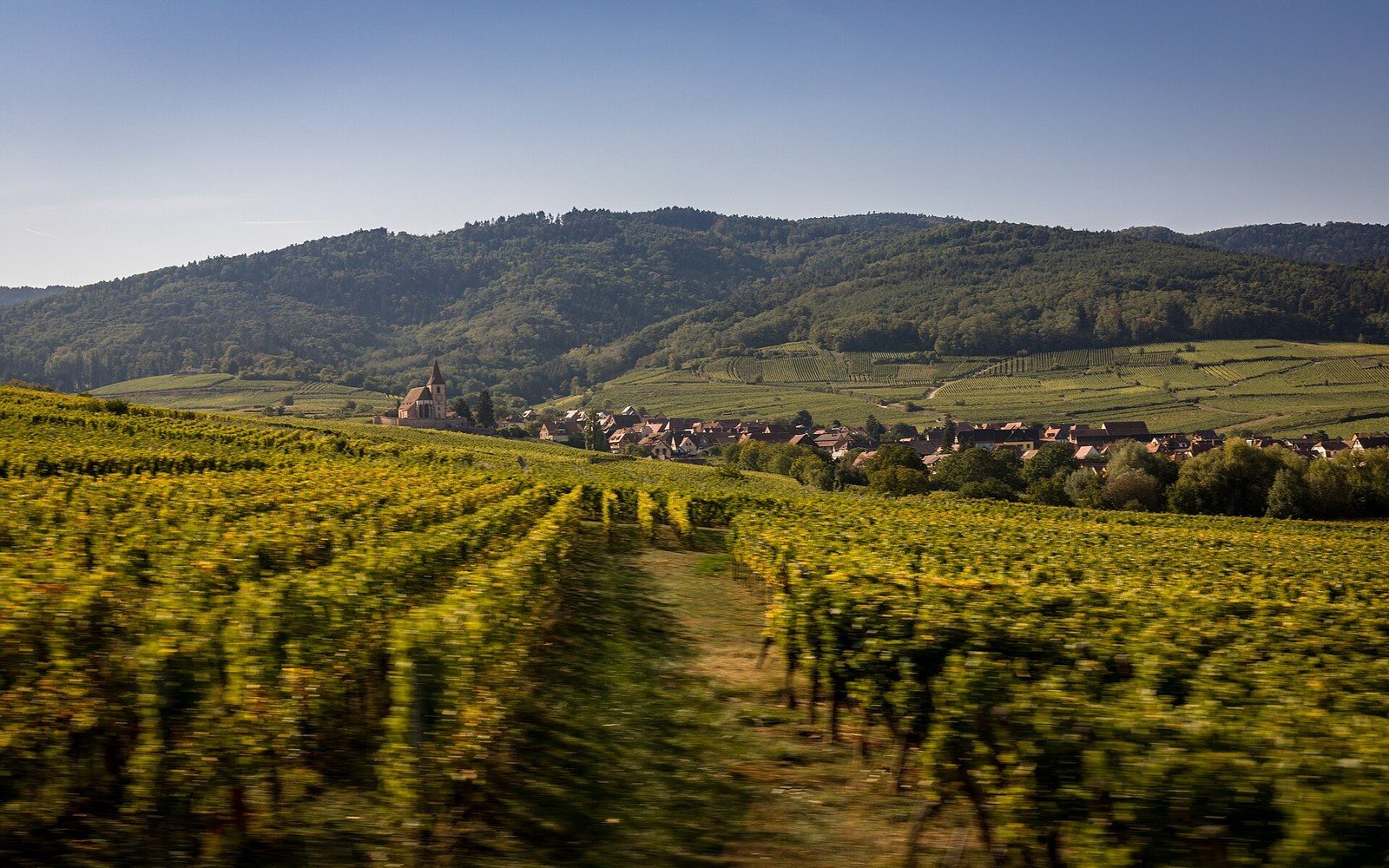
Photo: Sick Platanus ×hispanica trees, Canal du Midi, Agde · Wikimedia Commons · Photo: Route des vins, Alsace · Wikimedia Commons
A saturated wall does two things that compound each other. First, water conducts heat far more efficiently than still air or dry stone, so the wall's effective thermal resistance — its capacity to slow heat loss — collapses. The DPE, the Diagnostic de Performance Énergétique, uses a calculated U-value for the wall. A wet wall returns a worse U-value than a dry one, and that number feeds directly into the energy rating. A property already rated E or F on the basis of its dry construction can slip to F or G once chronic moisture retention is factored into the assessment.
Second, cycles of freezing and thawing in a saturated wall mechanically destroy the masonry from inside. Water in the pore structure expands on freezing. At altitude — in the Cantal, in the higher Cévennes, in the Vosges foothills behind Colmar — properties face dozens of freeze-thaw cycles each winter. The damage is not immediately visible behind the render. It announces itself years later when sections of render peel away carrying stone face with them.
Why it happened so widely
The spread of cement render onto old rural buildings in France was a twentieth-century phenomenon, driven partly by the lower cost of Portland cement after the Second World War and partly by the assumption that harder meant better. Lime had to be slaked and worked; it set slowly; it required skill. Cement was consistent from the bag and set fast. For builders working quickly through the reconstruction period, it was straightforwardly easier.
Agricultural buildings converted to rural holiday lets — the meublés de tourisme classified by Gîtes de France and latterly listed on platforms including Airbnb — were rendered in cement in large numbers through the 1970s and 1980s, precisely the decades when the gîte network founded by Émile Aubert in 1955 was expanding most rapidly across the Alpes-de-Haute-Provence and beyond. Many of those renders are now between forty and sixty years old. They are cracking, and the moisture they have been trapping is inside walls that the DPE now assesses for thermal performance.
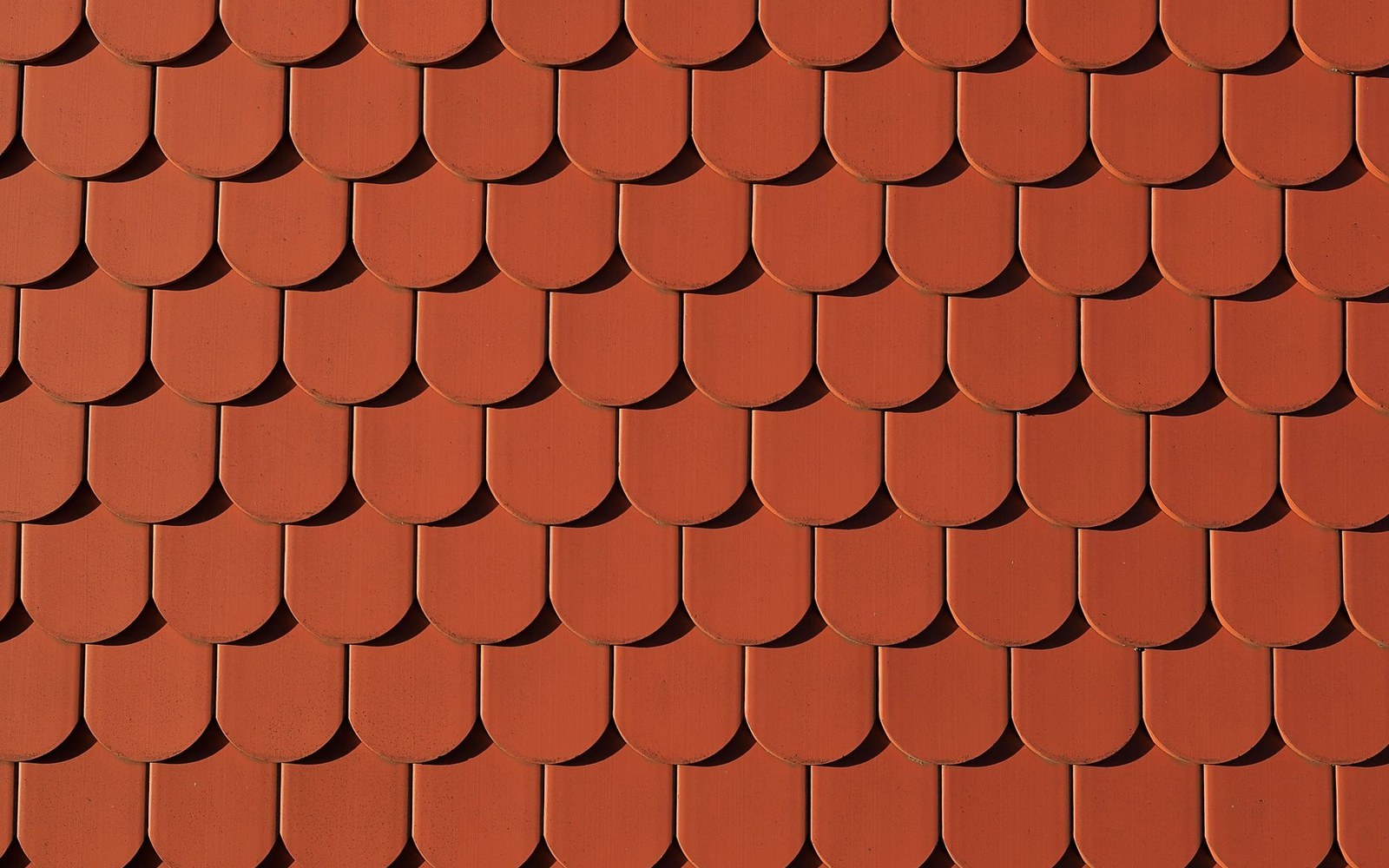
Three hundred to five hundred kilograms a square metre, laid dry on oak.
Photo: Stefan Haderlein / Pexels
The relationship between solid stone walls and poor energy ratings is already well documented. Cement render makes that problem measurably worse by removing the one compensating mechanism the lime-mortar system had: the ability to expel moisture and return to a drier, more resistive state after a rain event.
What the evidence looks like
A surveyor working on a stone property will probe for moisture behind intact render using a capacitance meter. Readings significantly above ambient are common even in properties that look externally sound. Published research on moisture transfer in masonry structures confirms that cement impedes vapour transmission through masonry in precisely the way the building-pathology literature describes. The wall itself carries the record: dark staining at the base, efflorescence where salts have migrated outward through cracks, and mortar joints that, once exposed, often prove to be powdered rather than coherent.
The damage is the argument. No further indictment is needed.