The physics changes before the DPE does
A solid stone wall — granite, limestone, schist, whatever the region threw up — is not insulation. Its thermal resistance is low. What it carries is mass: a thick wall absorbs heat slowly during the day and releases it slowly at night, moderating the interior temperature by buffering rather than blocking. That buffering capacity is called thermal mass, and it is real, measurable, and largely ignored by the DPE (Diagnostic de Performance Énergétique, the French energy performance certificate rating properties from A to G).
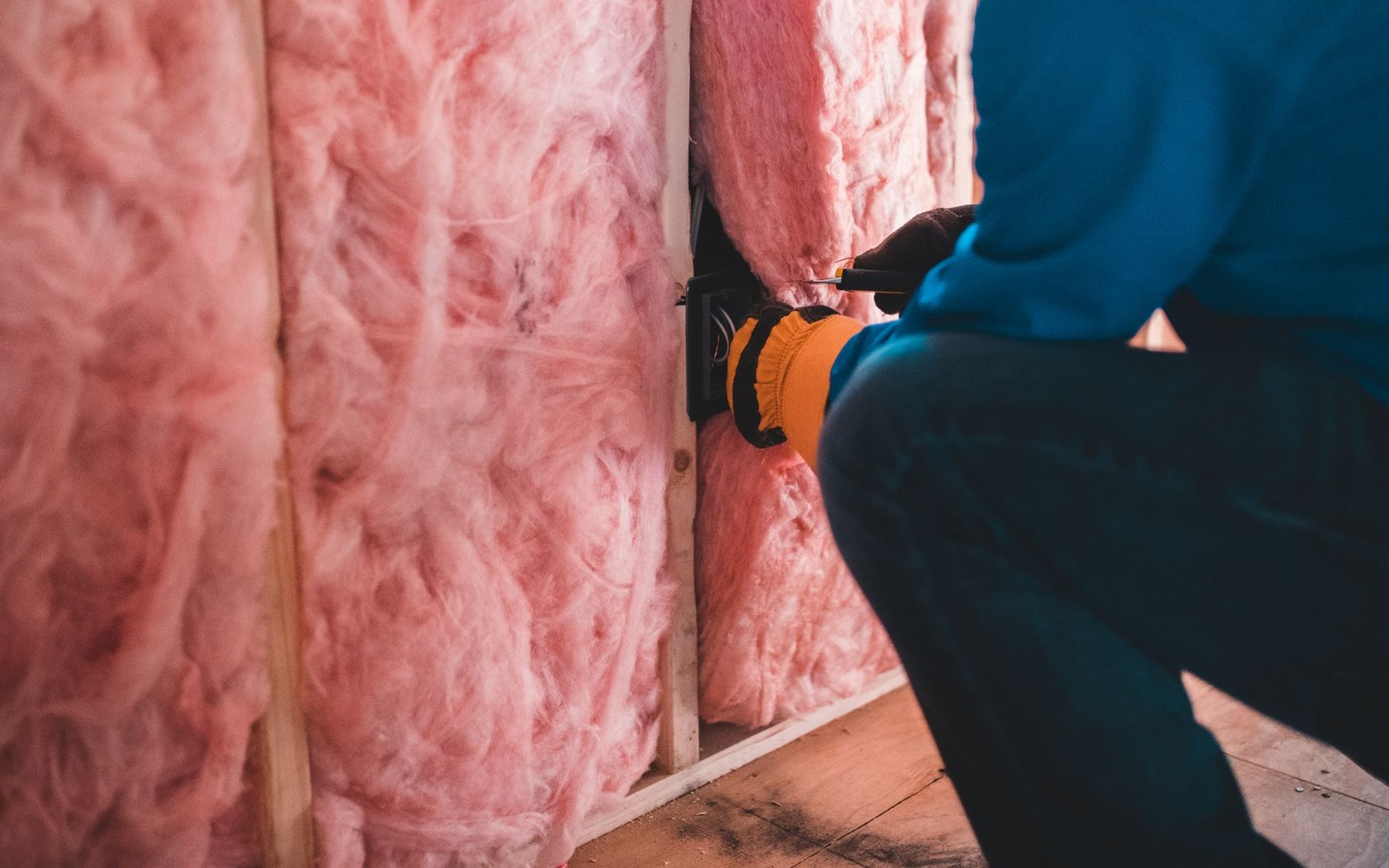
When a layer of mineral wool, wood-fibre board or rigid polystyrene is fixed to the inside face of that wall, something immediate happens: the stone is cut off from the interior. Its thermal mass — the slow absorption, the slow release — no longer serves the room. The room now sits behind a thin insulating layer that warms up quickly and cools down quickly, behaving more like a modern lightweight building than the centuries-old fabric it is sitting inside. The DPE calculation, which measures steady-state heat loss rather than dynamic thermal behaviour, tends to reward that trade. The wall's U-value — its rate of heat loss per square metre per degree of temperature difference — drops sharply, and the rating rises accordingly.
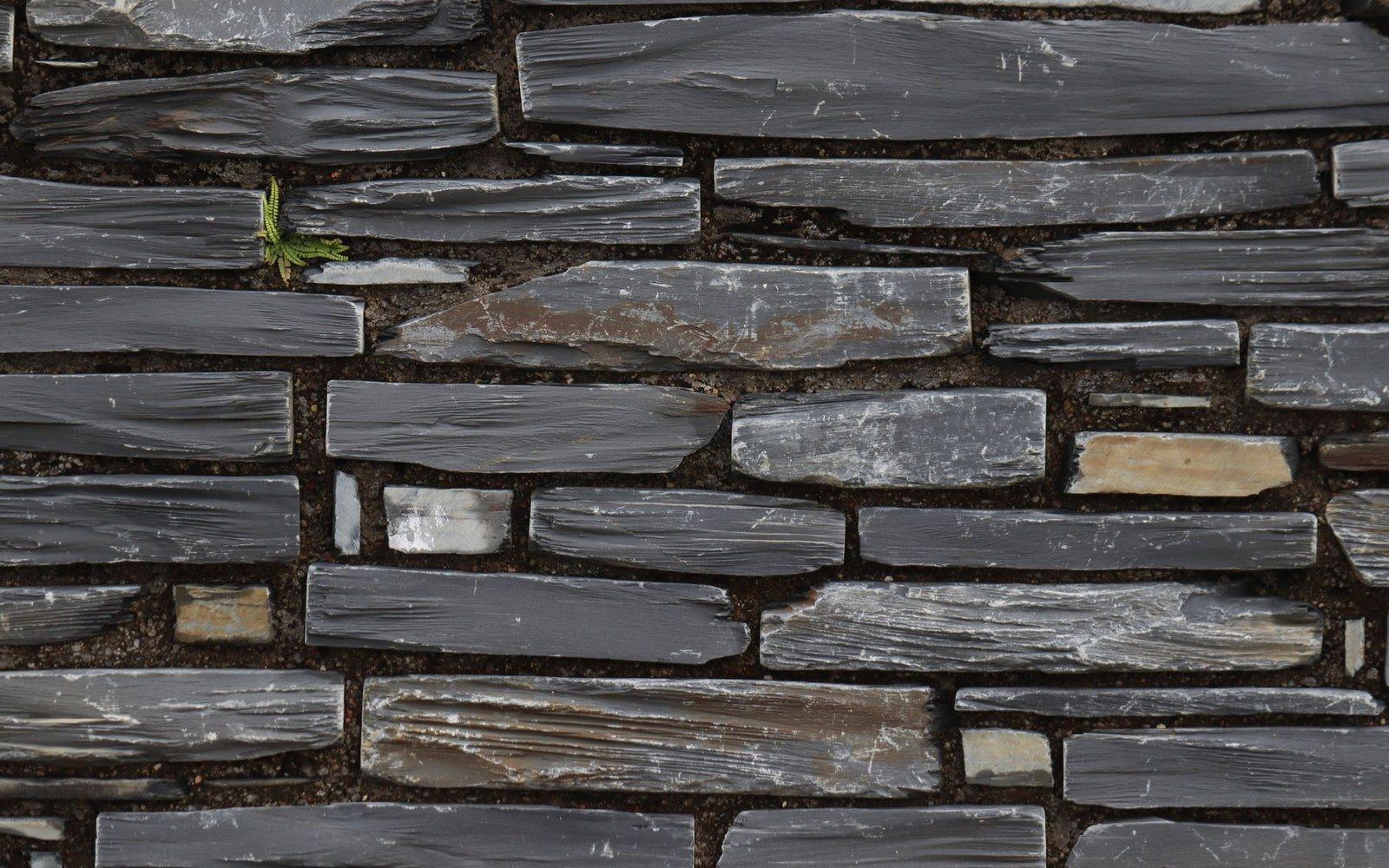
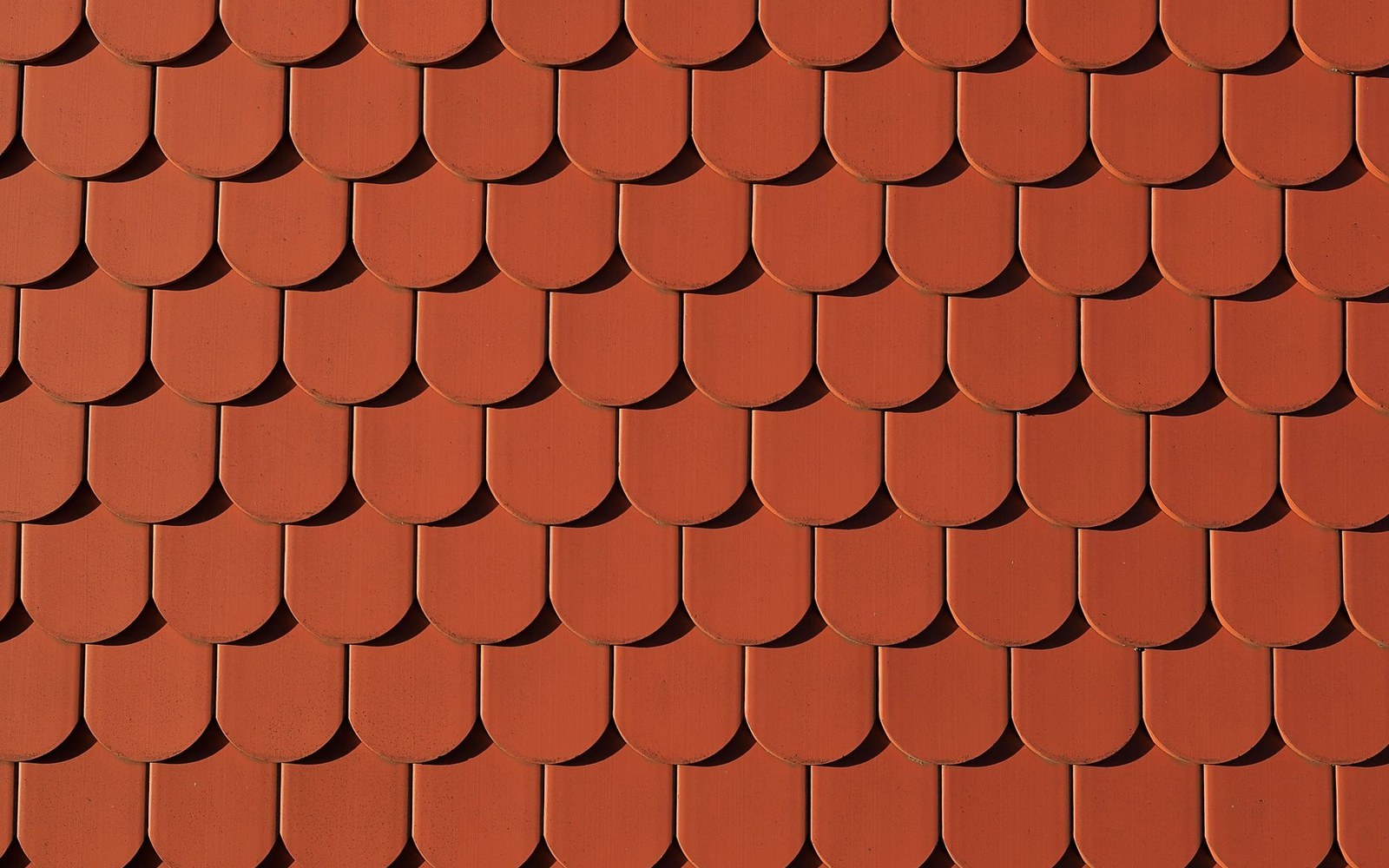
Diminishing courses on a Périgord lauze roof: the largest slabs at the eaves, the smallest at the ridge, each one held down by its own weight rather than a nail. Three hundred to five hundred kilograms a square metre, laid dry on oak.
Photo: Boys in Bristol Photography / Pexels · Photo: Stefan Haderlein / Pexels
What happens at the wall itself
The thermal physics inside the wall changes too, and not always for the better. Before insulation is applied, the stone warms gradually from the interior; dew point — the temperature at which moisture in the air condenses — is typically reached somewhere near the cold outer face, where condensation can dry off in wind and rain. Add internal insulation and that cold zone migrates inward, to the back face of the stone or to the interface between stone and insulation. If vapour passes through the insulation and meets cold stone, it condenses there. In a wall built with lime mortar and lime render, the system is breathable — some moisture movement is accommodated. In a wall where cement render has been applied externally, that movement is largely blocked, and interstitial condensation has nowhere to escape.
The choice of insulation material affects the scale of that risk. Wood-fibre board is vapour-open; it allows some moisture diffusion and sits closer to the behaviour of traditional materials. Closed-cell foam is vapour-closed; it forms an effective barrier but demands meticulous detailing at every edge and junction, because any gap becomes a condensation route. Neither choice abolishes the problem. Each shifts where it lands.
Dimensions: the loss the DPE does not see
Internal insulation also consumes floor area and ceiling height. A standard 100 mm insulated panel with its studwork takes around 120–140 mm from each wall it covers. In a room of 4 by 5 metres, lining four walls reduces the usable area by roughly two to two and a half square metres — a noticeable fraction. In a longère (the long Breton granite farmhouse) or a Périgord building where rooms were already modest, that reduction is felt immediately. The DPE does not record or penalise this. The rating may improve; the room shrinks.
Listed buildings and those within the protected perimeters overseen by the Architectes des Bâtiments de France often face restrictions on external insulation that make internal application the only viable option, meaning owners absorb both the dimensional loss and the moisture risk without any alternative route to the same rating gain.
How the DPE responds
The current DPE methodology, introduced by ADEME in its 2021 revision, calculates energy performance from declared building characteristics rather than metered consumption, and uses a standardised occupancy and climate scenario. It gives weight to U-values. A wall insulated internally to current standards can move a property from E to C or D in the calculation, even though the thermal mass benefit has been removed and the moisture risk has increased. For owners of rural stone properties whose G and F ratings will trigger letting bans from 2025 and 2028 respectively, that rating gain is the immediate practical pressure — and internal insulation is often the only structural modification that does not require planning consent or ABF approval.
The DPE rewards a number it can measure. What it cannot measure — the moderating weight of old stone, the vapour balance in a lime-built wall — is not in the formula.