Reading the Landscape
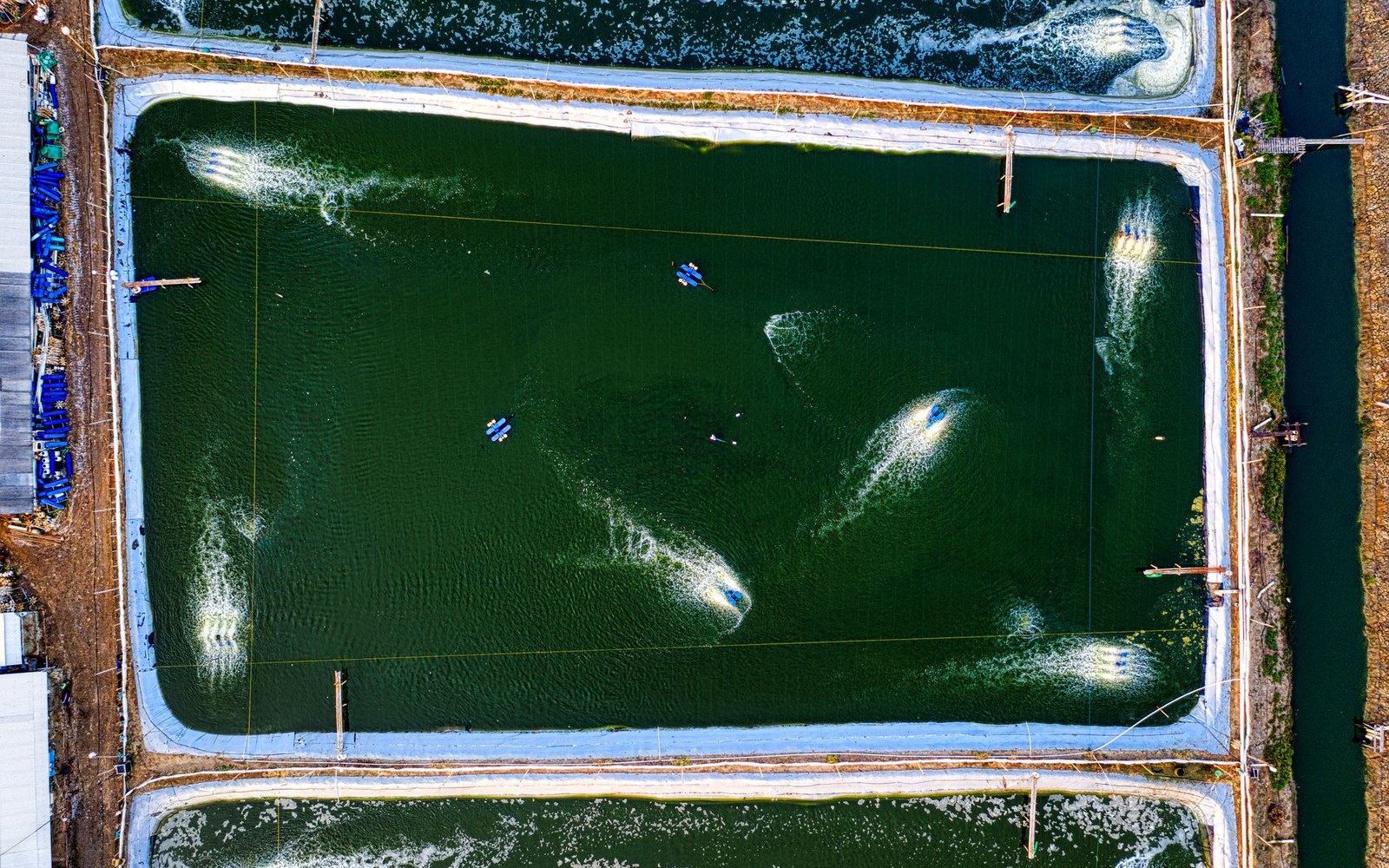
The Marennes-Oléron basin sits where the Charente river meets the Atlantic, opposite the Île d'Oléron. From the road the terrain reads as flat pasture interrupted by low embankments and rectangular pools — the claires, shallow ponds dug into the Seudre marshes and lined with grey-blue clay. At low tide the pools barely move. They are not beaches, not mudflats, not open water. They are managed agricultural land, parcelled and owned, with sluice gates that control the exchange between salt water and brackish pool.
The oysters — Pacific Crassostrea gigas, largely, since the native flat oyster (Ostrea edulis) collapsed in the 1970s — are raised at sea on ropes or bags, then transferred to the claires at the end of the production cycle. The affinage, or finishing, lasts four weeks at minimum for the standard grade, longer for the premium fine de claire and the rarer pousse en claire, which is left for several months at very low stocking density. During this period a microscopic diatom called Navicula ostrearia accumulates in the gill tissue and turns the flesh green, a quality mark the market has recognised for more than three centuries.
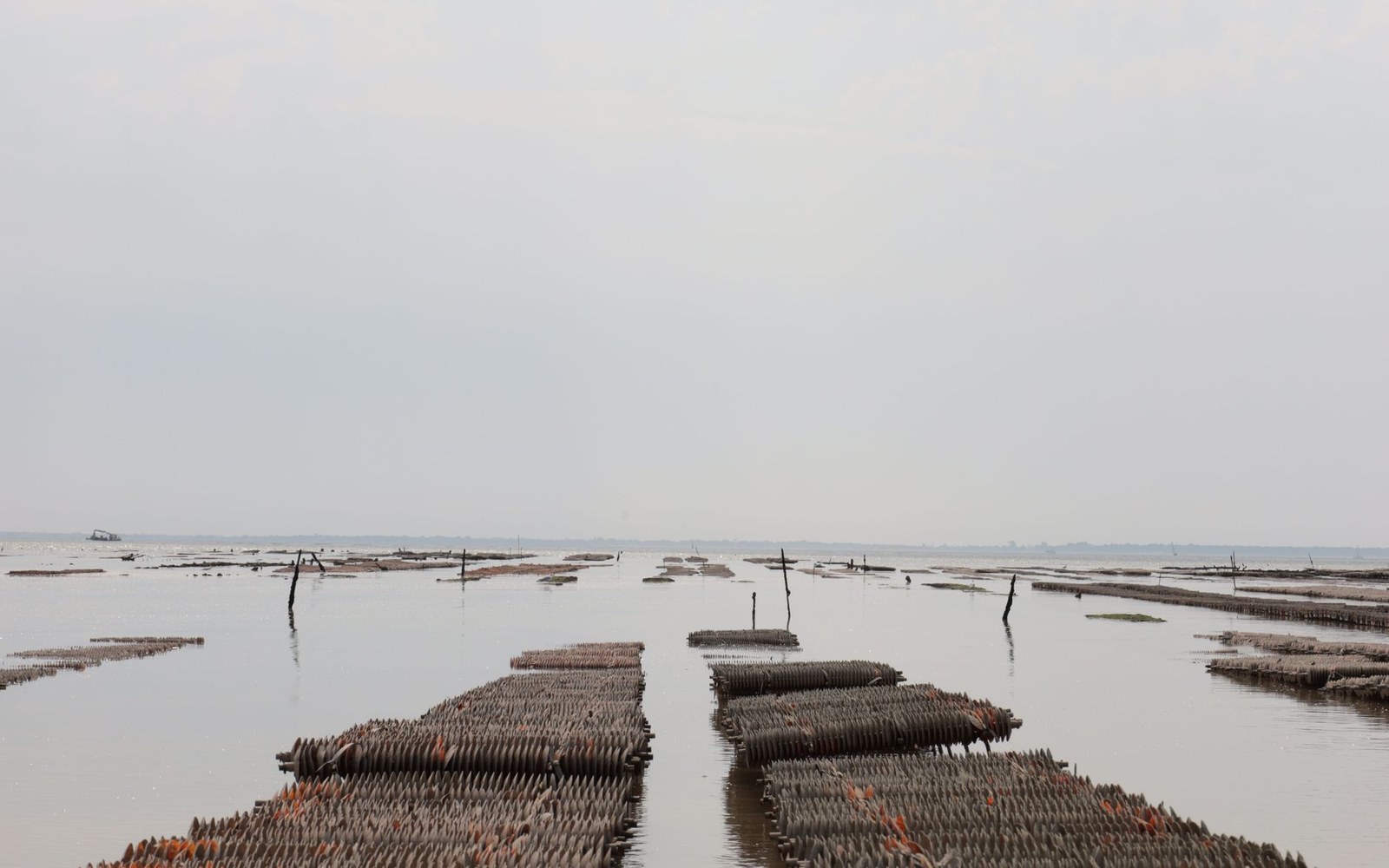
The claires are former salt pans; the oyster is finished in them, not grown. A park that permits farming, forestry and building inside its own boundary.
Photo: Serhii Kovalov / Pexels · Photo: marie françoise bastien / Pexels
The IGP — Indication Géographique Protégée, the European quality designation one tier below AOC — covers the Marennes-Oléron name and defines the production zone, the finishing conditions and the minimum affinage times as confirmed by INAO, the national institute that administers origin designations in France. The claires themselves fall within that defined zone; an oyster finished outside it cannot carry the name.
What makes the landscape legible as working land is the evidence of constant maintenance. Embankments must be kept watertight. Sluice gates are opened and closed with each tidal cycle. The clay bottom is periodically harrowed to release nutrients and control the algal balance. None of this is visible to a passing driver the way a vineyard's wired rows are, but the geometry of the ponds — regular, bounded, served by narrow maintenance tracks — announces that this is cultivated ground managed to a production logic, not coastal nature reserve.
The Marennes-Oléron basin is sometimes cited as the largest oyster-finishing area in Europe, measured by volume. Whether or not that ranking holds in any given year, the claires register as a specific form of agricultural landscape: neither field nor harbour, shaped entirely by the biology of a mollusc and the chemistry of Atlantic clay.