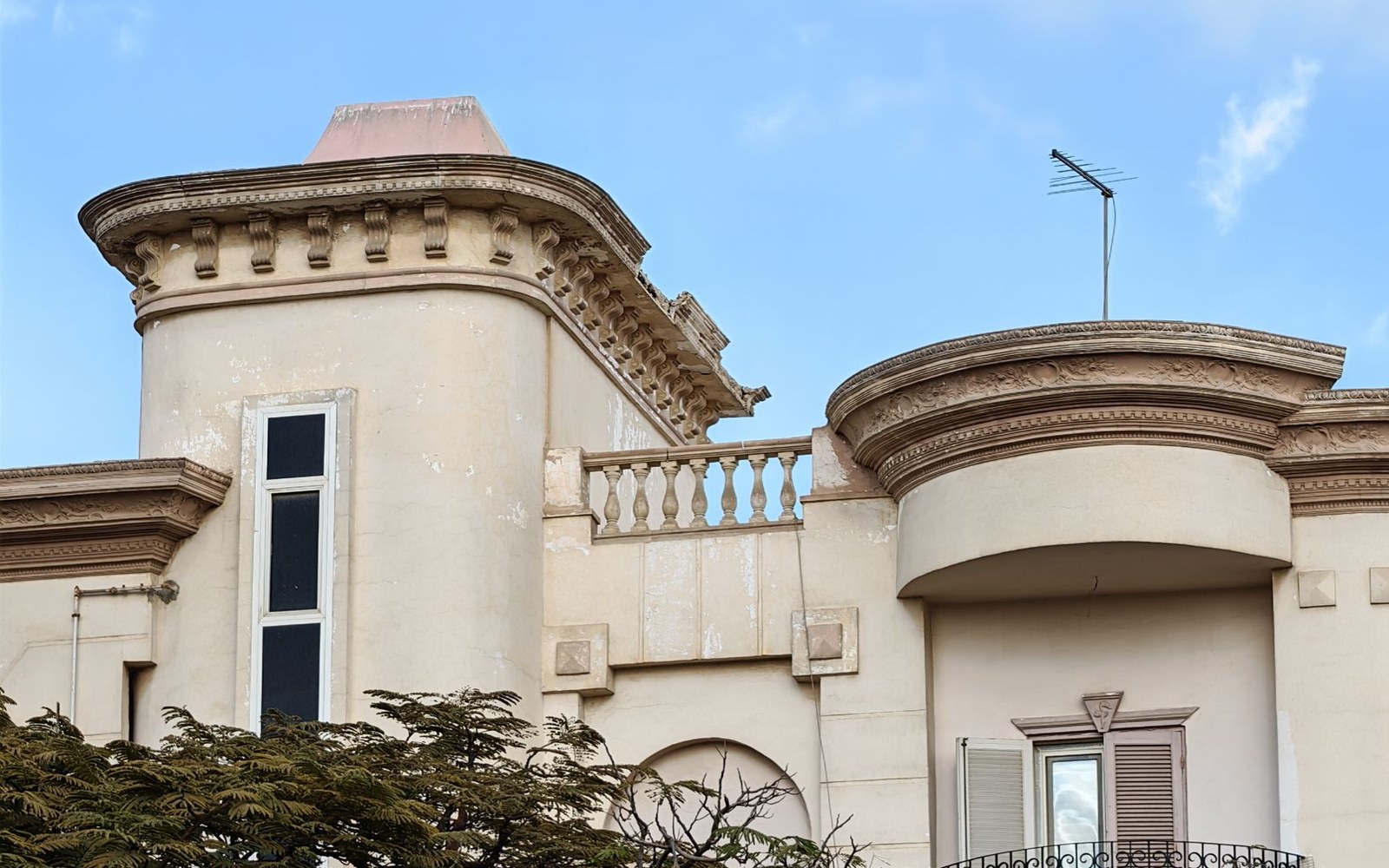
How the Tile and the Cornice Work Together
The tuile canal — also called the tuile ronde — is a fired clay tile shaped as a half-cylinder. Laid in alternating courses, one concave channel collecting water and one convex cover shedding it, the tile was already in use across Roman Gaul. Unlike the flat interlocking tiles of northern France, it relies on gravity and overlap rather than mechanical lock, which means it tolerates the thermal expansion of sun-baked terracotta roofs without cracking. The profile is shallow in pitch: most canal-tiled roofs across Provence, the Languedoc and the Roussillon sit at angles between fifteen and thirty degrees, a pitch low enough that the Mediterranean climate, with its long dry summers, justifies it.
The problem the profile creates is at the eaves. Water leaves the roof not in a thin sheet but as a series of concentrated streams from each concave channel tile, and those streams hit the wall face at the precise point where they can do most damage — wicking into the masonry and, over decades, eroding the mortar. The génoise solves this. Named for its supposed Genoese origin, though the form appears independently across the western Mediterranean, it is a corbelled cornice built from two, three or sometimes four courses of canal tiles projecting progressively further out from the wall head. Each course overhangs the one below by the depth of one tile lip. The effect is a layered bracket that throws the drip line out beyond the wall face entirely, carrying water clear of the stonework and down onto the ground or into a gutter laid at the foot of the overhang.
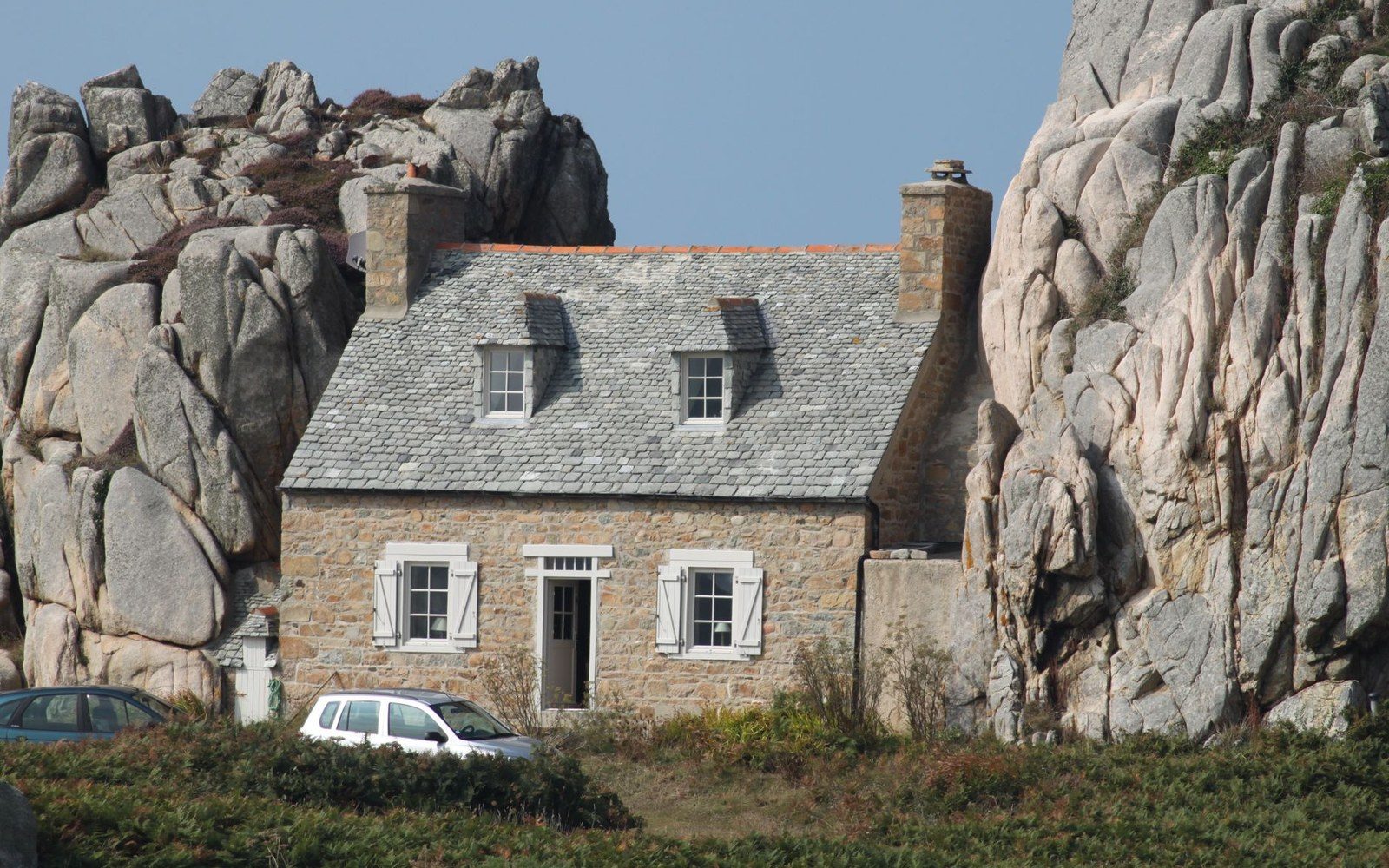
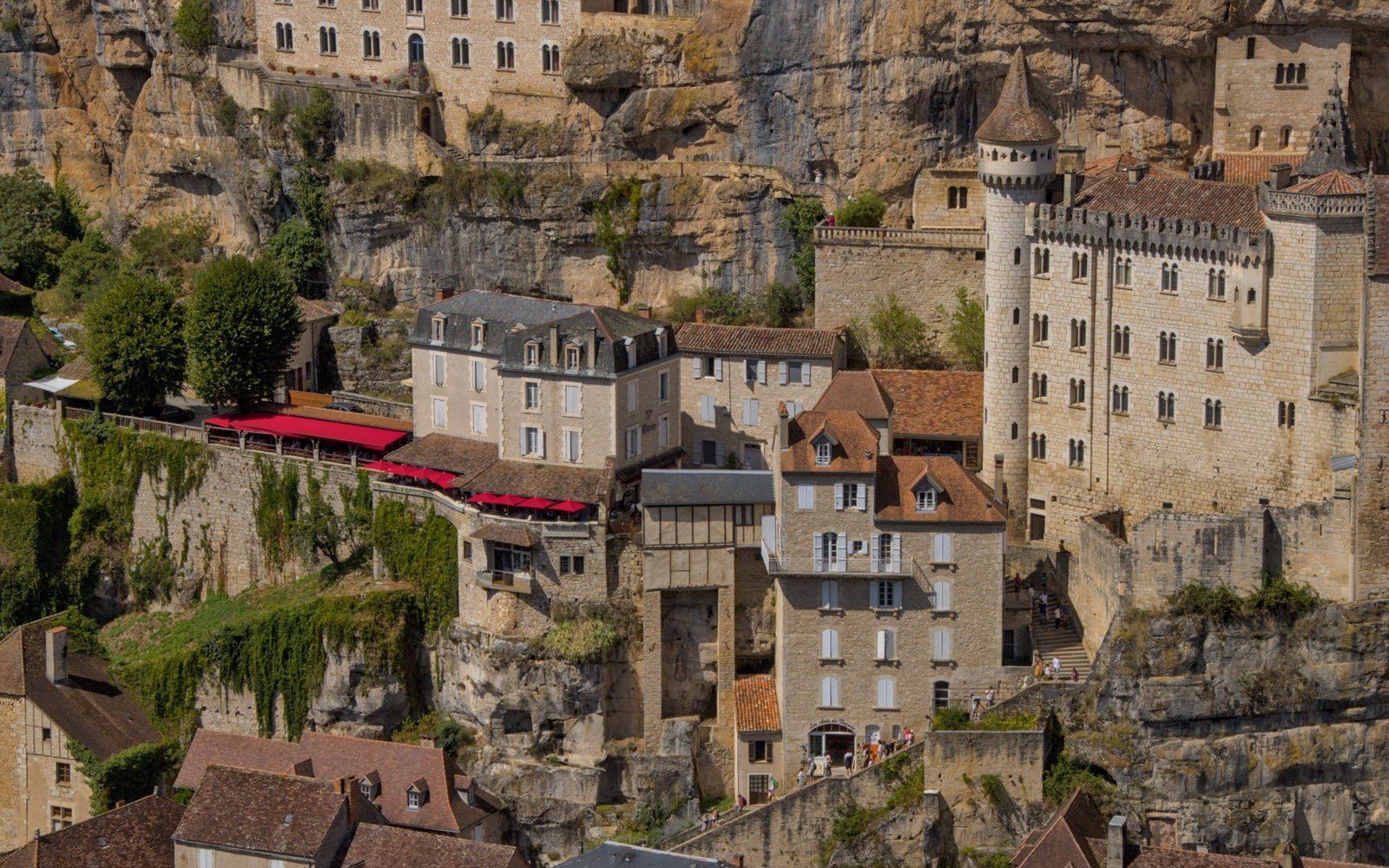
The blind north gable: a longère was lengthened along its ridge, never outward. Within the 500-metre abords, most work visible from the road needs an ABF opinion.
Photo: lemapuche breton / Pexels · Photo: Matthias Polen / Pexels
The génoise is the eaves detail common to the Provençal mas and to the farmhouses and village houses of the Hérault, the Gard, the Var and the Vaucluse. It appears in Corsica, along the Catalan coast, and in parts of the Basque Country where Mediterranean building influence extended along the piedmont. In Alsace or Normandy it is absent; those regions use a different tile form and different eave solutions altogether. In the Périgord, where lauze stone-slab roofing dominates, the génoise is equally rare.
The Monuments Historiques database records many rural buildings in the Midi whose génoise cornices are cited as character-defining features — elements that the Architectes des Bâtiments de France will refuse to allow cement mortar to replace when the tile is re-bedded. The construction detail is documented in the French building heritage record as a regional marker as reliable as the tile itself.